
Thank You! I just realized card templates don’t accept furigana (and it’s probably not necessary either). I found a Word hack that could take out all bracketed/parenthesis’d kana.
1 Like
Actually Kitsun templates do, but I believe it has to be a custom template with something like [Furigana] or something
1 Like
Omg that’d be so nice  I only know about this website from Leebo - http://sanabo.com/ when he made this post
2 Likes
I should know this, I just assembled a deck with furigana 
What you shared is perfect then, thx again!
I saw this post but completely overlooked the link, thank you! Always great to get native explanations that can be added to cards…oh, this site is pretty big but at least they have popularity lists. 
3 Likes
What I really like about that website is that it has ranks on how popular in text and in speaking things are (last point of screenshot below).
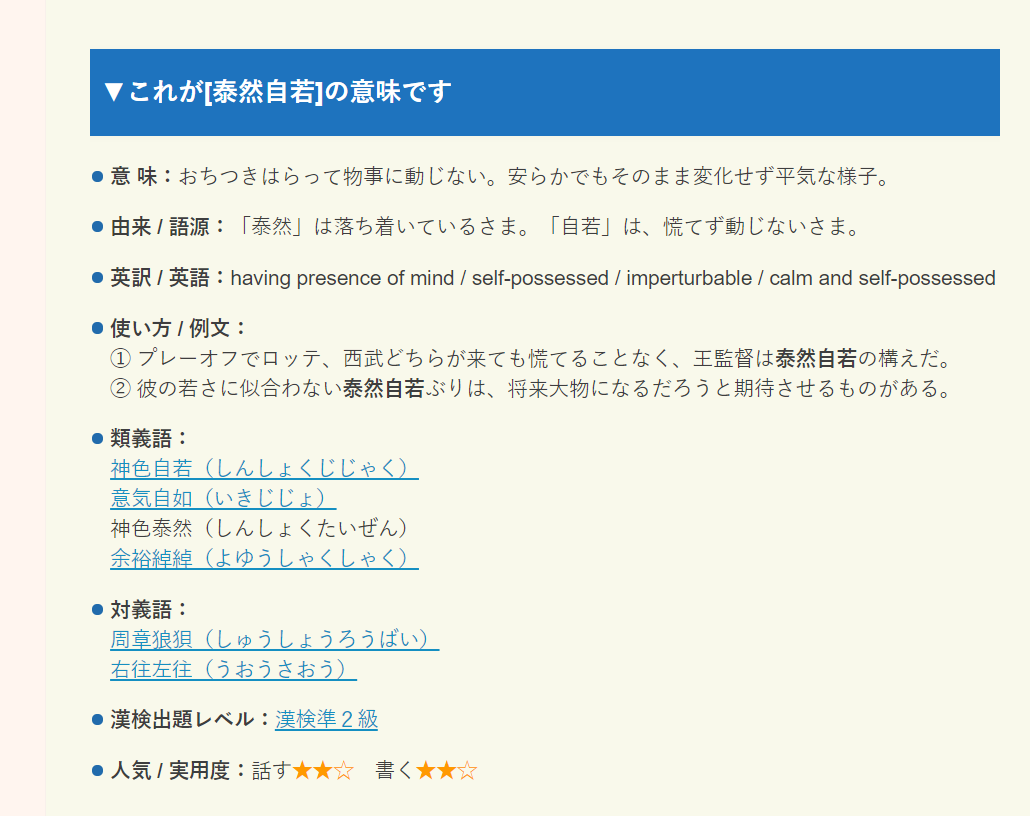
I think a deck containing that information would be pretty amazing.
I’ve found a book with 101 Japanese Idioms and decided to go ahead a make a deck out of it. Compared to this deck, only 23 out of 101 expressions are shared, so it’s a nice deck to study after the 180 expressions deck 
Eventually, it would be nice to have a more comprehensive one, like top 500 expressions. I think that would put those doing the deck at a very good level when it comes to knowing proverbs/expressions (same with yojijukugo).
4 Likes
I could potentially use that resource in combination with this book I showed you earlier. Looking for more idiom resources because you gotta love idioms.
3 Likes
It will look something like this once I go through the list and then have it tagged by frequency writing/speaking. I was playing with some other layouts but ultimately using the default worked best (as I don’t have html skills to play with it) but I think it will present ok…just the above won’t utilize furigana, which is probably ok as a more advanced deck anyways. I separated their english from the meaning as they are word heavy but I liked the differences and thought it is worth presenting both.
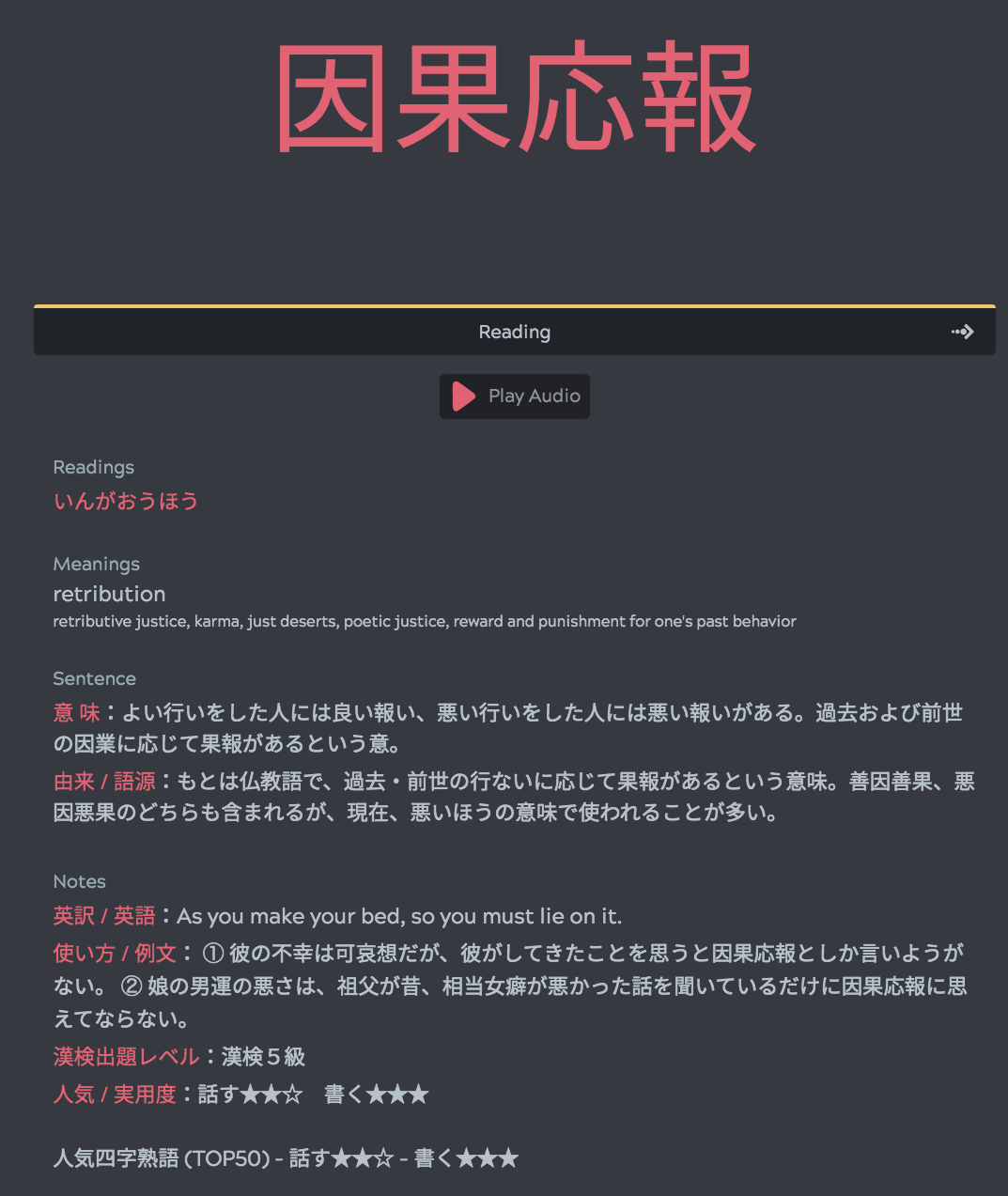
I added this right away, everything looked super useful, thank you! 
The utility of the ‘known’ feature is pretty amazing, look forward to the WK API.
This looks great too, recent and affordable.
4 Likes
@icefang97, I just marked the proverb version ‘mark for deletion’ so if you are adding lessons, use the book version and/or hibernate the proverb until deleted. Thank you for catching! 
@Neicudi, admittedly I didn’t check if this card was deleted last time. If it was, it necromanced itself 
3 Likes
No problem. I forgot this forum existed. While I have you here I was wondering: What is the difference between 目から鱗が落ちる and 目から鱗の落ちる
thank you
3 Likes
I believe 目から鱗の落ちる behaves more like adjectival clause while 目から鱗が落ちる is more a complete expression. Wanted to give a learner the opportunity to practice since both seemed different enough to warrant a new card for practice and had a separate dictionary entry (otherwise not that different at all from what I see so a choice to hibernate or not). You may have seen I put a little note that says 目からウロコ is what the book uses.
3 Likes
Yeah, が becomes の in relative cases, knowing that helped me a ton while reading 
4 Likes
Funny stuff I need to share. I was doing Japanese grammar and stumble upon のごとく(which means ように) grammar point and one of the examples was 光陰矢のごとし。 I was like “Hey I know that one!”
It actually was made with the のごとく grammar point. I was sure the expression wa今年s 光陰矢の年
Now that I think about it the reading made no sense but the kanji made sense for me. Now that I know that, the expression makes much more sense.
When I recognized one of these expressions in a book I read I just get so happy.
Thx again for this wonderful deck.
5 Likes
Hi @icefang97,
For ‘when in Rome’, 郷に入っては郷に従え and 郷へ行ったら郷に従え should be the only two cards, figured different enough if users wanted to practice. But I just put an added note on each card for alt meaning, so feel free to hibernate one (or anyone else using this deck) if you don’t want to.
2 Likes
Might help to have a tag for each one, like “form 1” “form 2” or something.
1 Like
Thx for the quick update. I was sure they were the same. Never realised the verb was different.
2 Likes
All set!
2 Likes
Hey, I noticed that those helping tags aren’t appearing for me. As I understand, you added them right?

1 Like
Ah, you meant part of speech entry and not an actual tag filter…all set!
1 Like
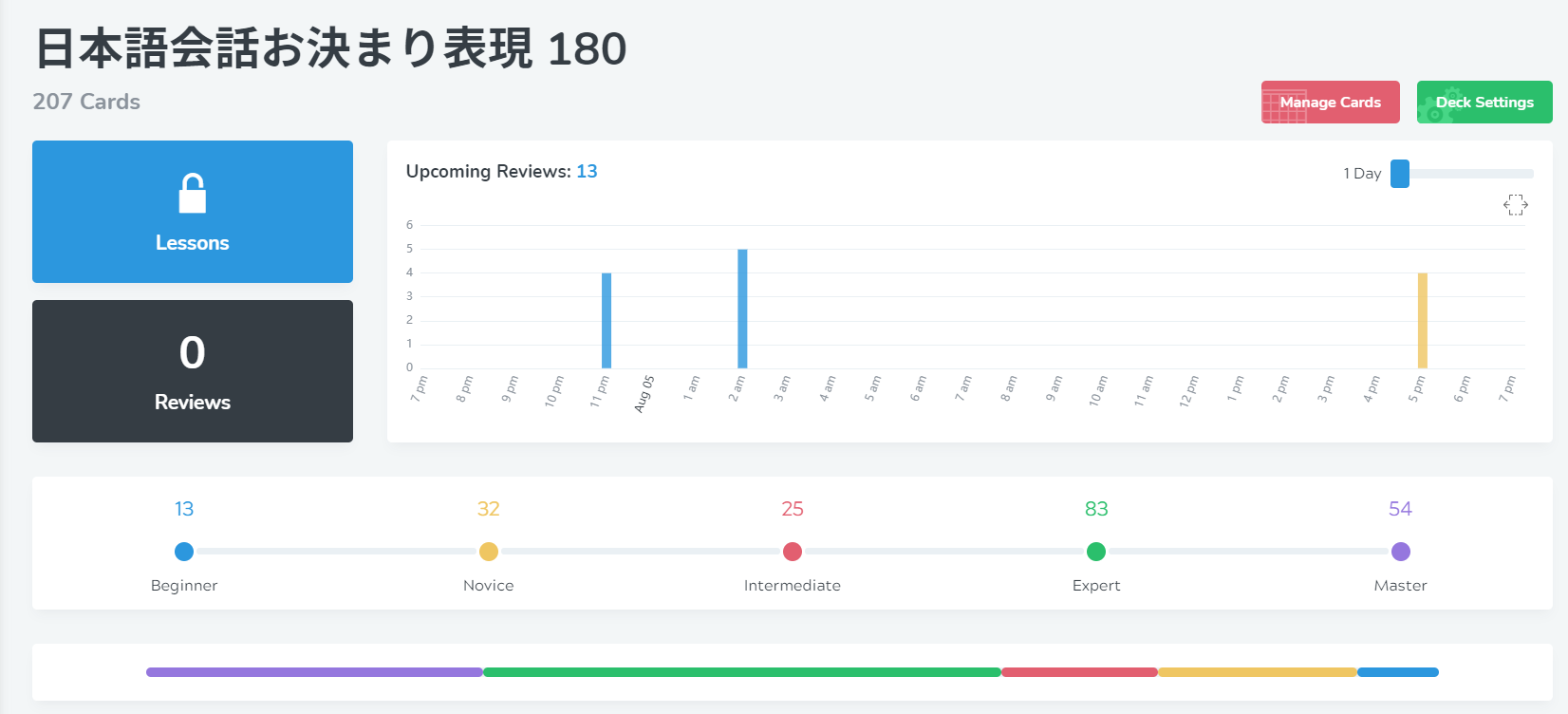
Ayy, finally after all this time I’ve finished all the lessons for this set! Can’t wait to eventually start the 101 Japanese Idioms set. It’s gonna be a while though, school’s coming up soon and I want to prioritize those terms + words I find myself. Thanks for the awesome set! It’s definitely been super useful~:smiley:
6 Likes
Congrat! 
I found it to be a challenging deck…but rewarding once you encounter them.
Sorry, I don’t have cookies like @Tomato, so here is a sassy kitsune

I’m swamped right now but I’m really enjoying this deck as well, time to dig in more. 
6 Likes